SAM BERNARDI sbernardi@postregister.com Jun 22, 2026
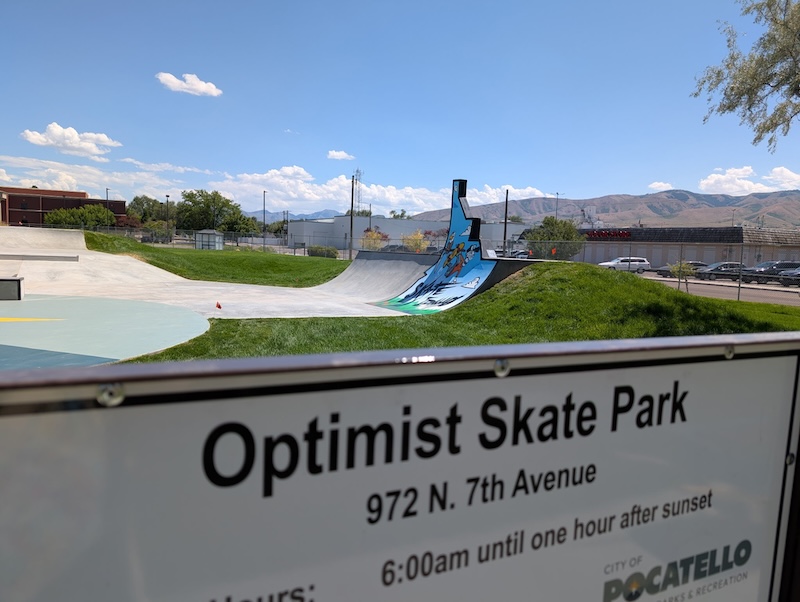
POCATELLO — Rhythmic whooshes and hollow scrapes and clickety-clacks were just some of the sounds at Optimist Skatepark on Sunday afternoon.
Exults for landed kickflips and words of encouragement combating scraped knees, ooohs and ahhhs and panging metal and teeth shaving nails were some of the others, as skateboarders from all around the area congregated in Pocatello for Go Skate Day 2026.
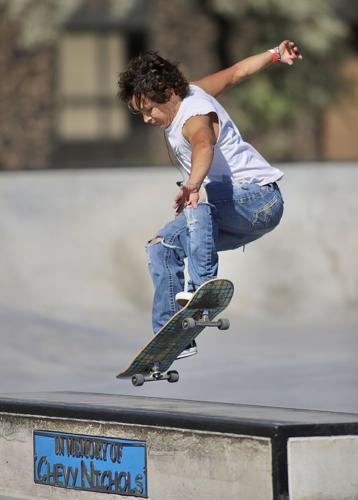
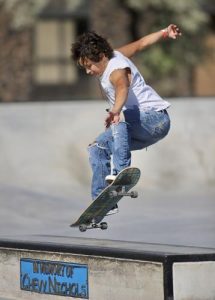
Dave Van Etten and his Skate Idaho association helped bring everyone together for their fourth annual meeting and first at the new Optimist Skatepark, a year-old facility decked with banks, bumps, flats, rails, ramps, walls and a picture of a boy gone far too soon named Chevy Nichols.
“The more and more we got into this, we really wanted to show the positive side of skateboarding and what it does for mental health,” Van Etten told the Post Register.
Chevy was an avid skateboarder who passed away in August of 2024. Van Etten reached out to the Nichols, hoping to honor Chevy’s memory and commitment to the skateboarding community while promoting suicide prevention and awareness.
Now, they award two $1,000 scholarships for skaters headed to an Idaho school. Part of the application is an essay on the mental health benefits of skateboarding, of which Van Etten could name countless:
“It gets you outside. It gets you away from your phone. Like, there are so many negative things that happen on social media and things like that. It’s a time for you to be unplugged. It’s a chance to be outside,” he continued.
One of the recipients, 2025 Century High School graduate and incoming Idaho State University student Noel Ferreyra, was extremely close with Chevy. The two skated together. Laughed at the park together. Helped each other up after falls.
“This sport has really helped me a lot, just cope with everything,” Ferreyra said.
It also emphasized more of the latter on a bittersweet day for Chevy’s mother, Stacey Nichols, when she and her husband, Brandon, handed out the big checks:
“That felt amazing. I wish we could give out more every year, and maybe eventually we will be able to do more than two,” Stacey Nichols said.
Unlike a team sport where a head coach and assistants provide instruction, skateboarding is solely player-led. You have only your fellow riders to lean upon for new tricks, technique advice and the support system that has helped navigate Noel through nearly the last two years.
“It’s not for everybody, of course,” Ferreyra said. “Because, if you get hurt, some people don’t want to get back up… You fall, and you have to keep going. And you just do it over and over again until you get it.”
Ferreyra was among the more skilled skaters at Optimist, facing off against his fellow veterans in the advanced competition category.
However, for every Tyler Cannon or Noel Ferreyra, there are as many — if not more — youngsters wrapped in knee pads and elbow guards and tightly-strapped helmets as their parents watched with anxious breath, hoping oh so dearly their baby would not get hurt, but more importantly, also gazed contently as they knew they were in the right place.
One father, Stacey Barker, had been out of the skateboarding scene for nearly 20 years. That is, until his daughter gifted him with an appropriately timed board on Father’s Day, ensuring he would have to knock off the rust to join her.
“It gives them a lot of confidence, just getting out there and trying new stuff,” Barker said.
Ferreyra and his fellow Best Trick competitors felt that during the event’s final act. The four participants took turns building up speed around a flight of stairs before plummeting from the top step, either using the handrail as guidance or flying solo with any number of reconfigured board positions, aiming to stick that perfect landing.
Many of the tricks were unsuccessful. Banged heads on the pavement. Getting extra use of their wrist braces. Boards flying into the grass with no captain to steer them.
And nobody minded. Nobody whined or bunched fists or threw a fit. Sure, there were mutters of disappointment and anger (some of which are unprintable).
An exasperated sigh of complacency. A — albeit brief — look toward the ground.
Yet, the skaters kept doing what they and everyone else had done all day: got back up and tried again. Incessant cheers from spectators and pats on the back from those who finally detached from their boards after hours of riding helped give people like Noel all the belief they needed.
Jimmy Dugan would have been proud; there was no crying in skateboarding.
The judges awarded prizes to the top three contestants in each of the six categories. The winners received new boards. Those winners included Dave’s son, Cade Van Etten, and his girlfriend, Maddie Whitelock.
Cade showed her the ropes, and it is now an activity — and an escape — they can enjoy together:
“Before I was dating him, I never really got comfortable with this type of sport. I found it very intimidating. And, he just made it a lot easier to find my inner peace and my self-confidence,” Whitelock said.
“It’s where he gets to play and not think about anything really,” she chuckled.
Cade, meanwhile, delved into the holistic value of this sport, which operates much like a craft with the hours upon hours of dedication poured into tweaking, improving and mastering even the subtlest moves:
“For me, and for lots of other people, it’s art,” Cade Van Etten said. “There’s tons of other people who use this as a safe space… I’ve found a lot of friends here.”
It should come as little surprise that someone who grew up with Dave is so entrenched in the skateboarding world. Dave’s message to his son is one that still echoes:
“The skateboard always listens.”
Skateboarding does not ask for your salary, what clothes you wear or which music you listen to, only that you find the courage to step on a board and forget fear, even if only for a moment.